Strangulated Hernia: A Life-Threatening Emergency Explained
March 31, 2026 Strangulated Hernia: A Life-Threatening Emergency Explained Introduction A strangulated hernia is the most dangerous complication of an untreated…
March 24, 2026
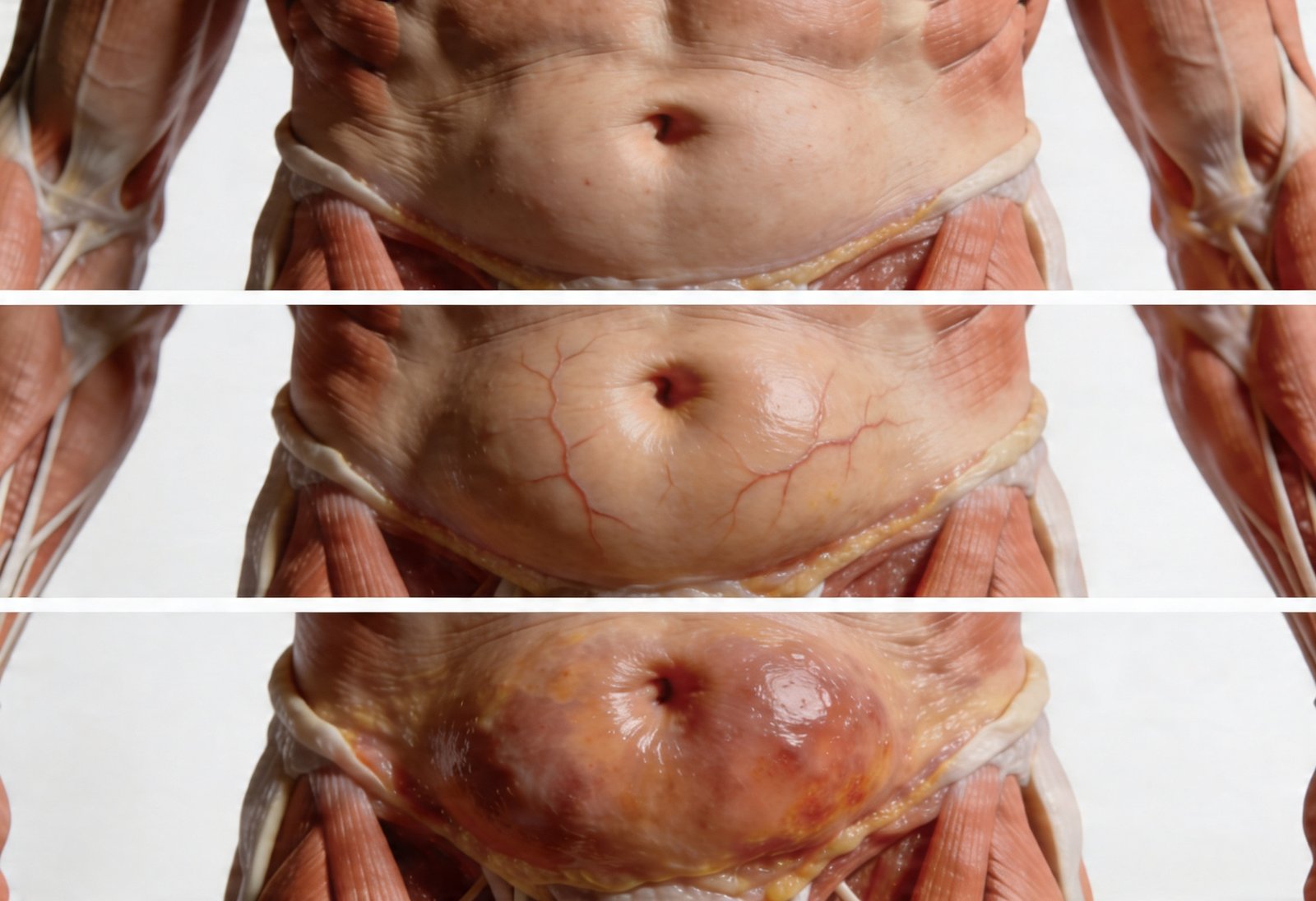
An untreated hernia is not a static condition. It is a progressive structural defect in the abdominal wall that tends to enlarge over time. While many patients initially ignore a small, painless bulge, delayed intervention can convert a simple repair into a complex surgery or, in severe cases, a life-threatening emergency.
In India, hernias are among the most common surgical conditions, particularly in men aged 40 to 70. In Bengaluru and across Karnataka, physically demanding occupations, chronic cough, untreated urinary obstruction, and obesity contribute significantly to delayed presentations.
Understanding the natural course of an untreated hernia is essential to making informed decisions about early surgical repair.
A hernia occurs when abdominal contents push through a weakness in the fascia, the tough connective tissue layer that maintains abdominal integrity.
Once the fascia develops a defect:
This mechanical failure progresses unless surgically corrected.
At this stage, the hernia is stable but structurally abnormal.
With time, increased intra-abdominal pressure from lifting, coughing, constipation, or obesity enlarges the defect.
Patients may notice:
Elective repair is simpler at this stage.
An incarcerated hernia occurs when the protruding tissue becomes trapped and cannot be pushed back.
Symptoms include:
At this stage, obstruction risk increases.
Strangulation happens when blood supply to trapped tissue is cut off.
Tissue death can begin within hours.
Red flag signs:
Strangulated hernia can lead to:
Emergency surgery carries significantly higher risk compared to planned elective repair.
The abdominal cavity behaves like a pressurized chamber.
Activities that increase pressure include:
Each pressure spike pushes more tissue into the defect, gradually enlarging it.
Scar tissue in incisional hernias is particularly vulnerable, as it is never as strong as original fascia.
In India, delayed hernia repair is common due to:
Studies show:
In Bengaluru and South Bengaluru, urban lifestyle factors combined with sedentary habits and metabolic disorders are influencing ventral and umbilical hernia patterns.
For minimally symptomatic inguinal hernias in adult men, watchful waiting may be considered under supervision.
However:
Watchful waiting is not recommended for:
Elective repair remains safer than emergency intervention.
Early evaluation prevents complications.
Assessment typically includes:
Accurate imaging allows precise surgical planning.
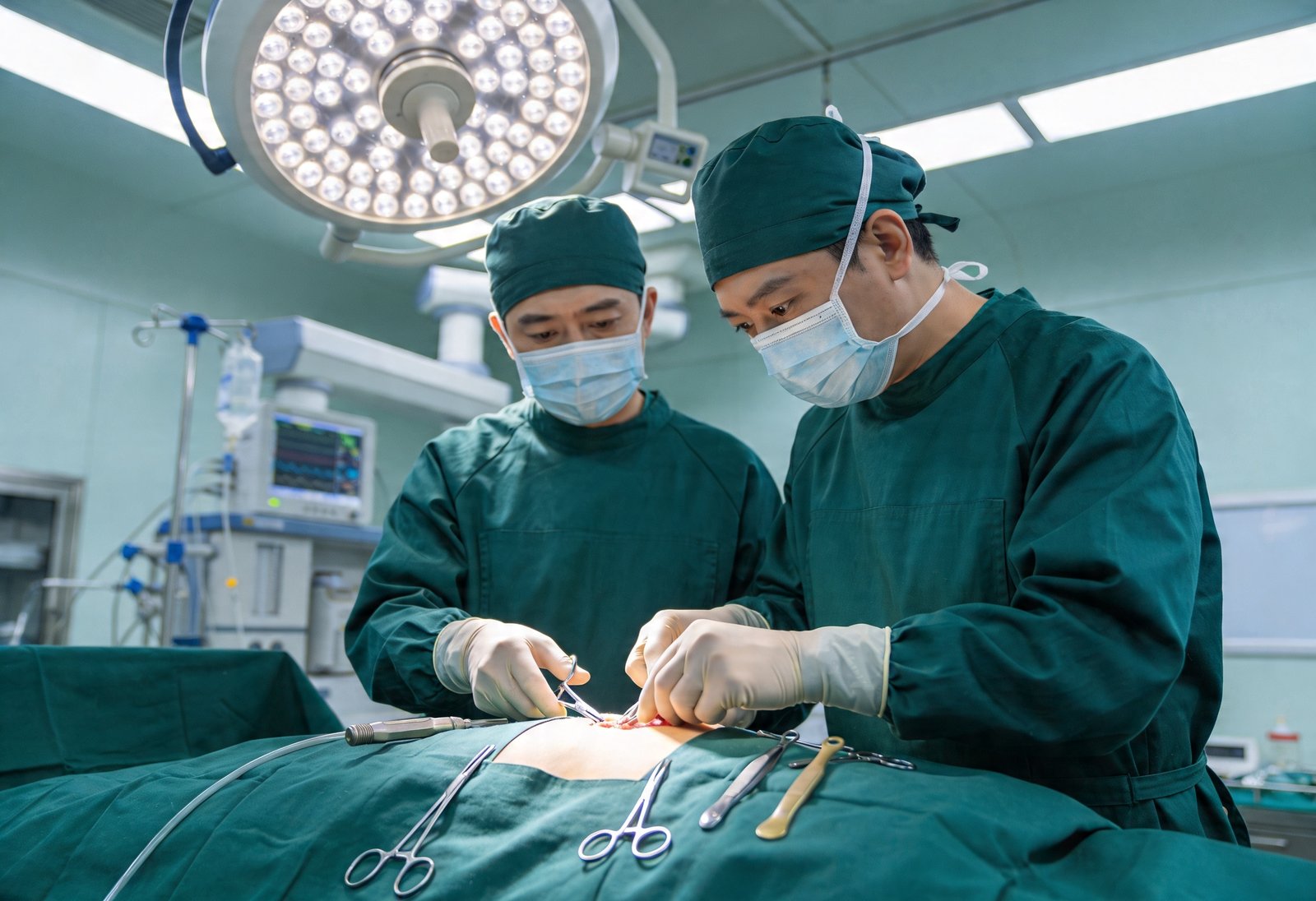
Surgery is the only definitive cure.
Minimally invasive, tension-free repair using mesh reinforcement.
Benefits:
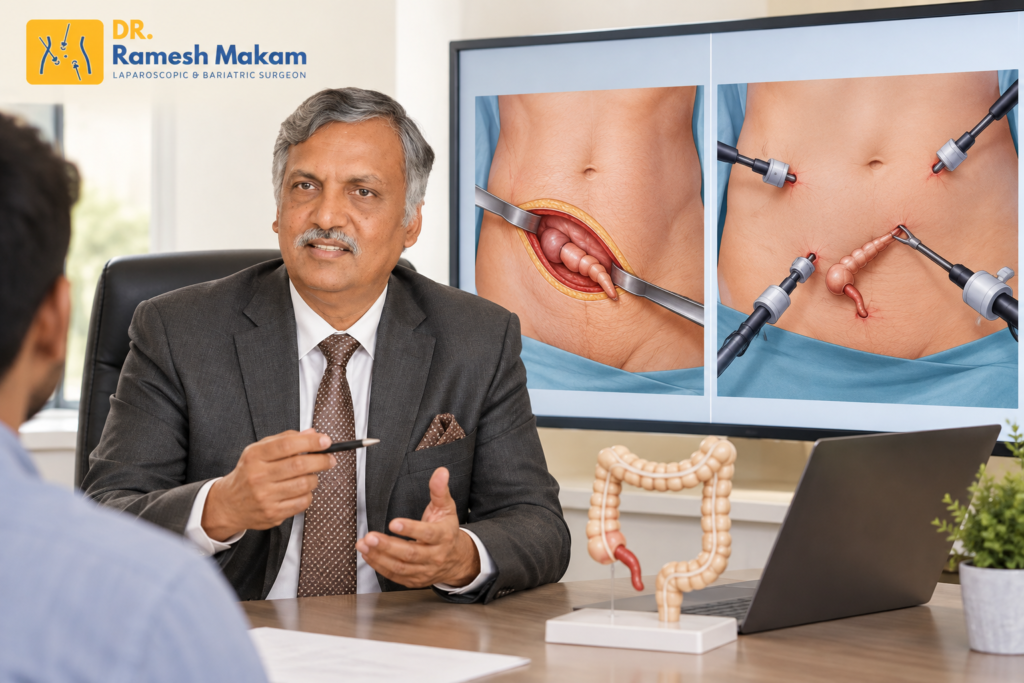
Advanced 3D visualization and precision control allow complex repairs through tiny incisions.
Reserved for:
Mesh-based repair remains the gold standard to prevent recurrence.
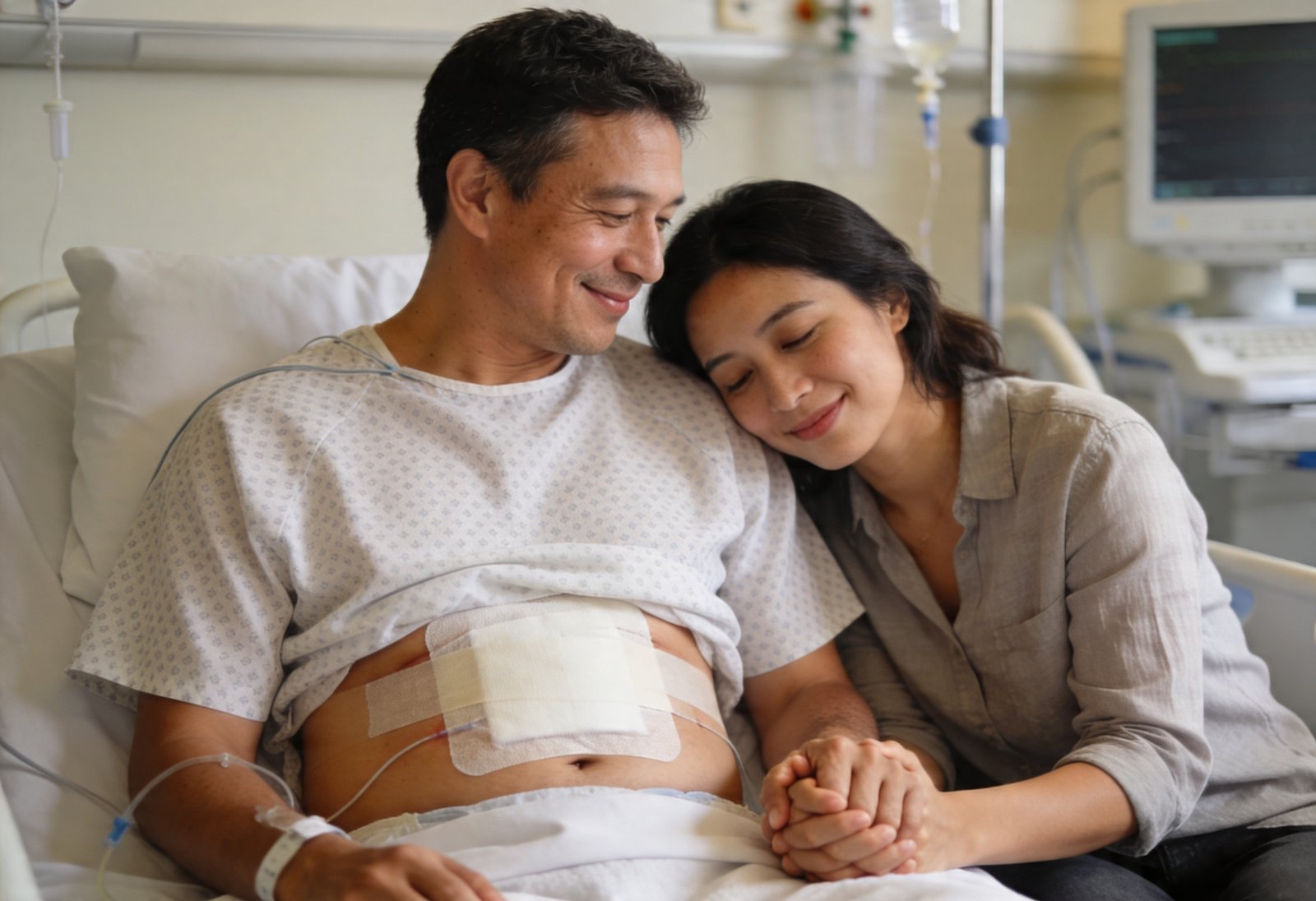
Elective surgery:
Emergency surgery after strangulation:
Advanced hernia management in Bengaluru is available under the expertise of Dr. Ramesh Makam, a pioneer in minimally invasive surgery in Karnataka.
He practices at:
With over three decades of experience, his approach emphasizes:
Patients can schedule consultations through:
https://drrameshmakam.com/
Early consultation improves outcomes and reduces long-term risks.
To reduce progression or recurrence:
Following postoperative restrictions carefully ensures durable repair.
An untreated hernia is a progressive mechanical defect. While it may begin as a minor inconvenience, it can evolve into a complex surgical challenge or life-threatening emergency.
Modern minimally invasive techniques have made hernia repair safer and recovery faster. The greatest risk lies not in surgery, but in delay.
If you notice a bulge, discomfort, or change in size, timely evaluation is essential. Early action prevents complications and preserves long-term quality of life.
1. Does every untreated hernia become dangerous?
Not immediately, but the risk increases over time, especially as the defect enlarges.
2. What is incarceration?
When herniated tissue becomes trapped and cannot be pushed back.
3. What is strangulation?
Loss of blood supply to trapped tissue, leading to tissue death and emergency surgery.
4. Can a hernia heal on its own?
No. The fascial defect cannot close without surgery.
5. Is watchful waiting safe?
Only in selected cases under medical supervision.
6. Why is emergency surgery riskier?
It often involves infection, bowel resection, and higher complication rates.
7. Does obesity worsen hernia progression?
Yes. It increases intra-abdominal pressure and surgical risk.
8. When should I consult a specialist?
As soon as you notice a bulge or symptoms, even if mild.
BEST Institute was started with the intention of sharing my knowledge with
other fellow surgeons. During this journey, many conferences and workshops
have been conducted. Skills training is the highlight of this Institute.
March 31, 2026 Strangulated Hernia: A Life-Threatening Emergency Explained Introduction A strangulated hernia is the most dangerous complication of an untreated…
March 31, 2026 What Happens If a Hernia Is Not Treated? Clinical Progression, Complications, and When to Act An untreated hernia…
March 17, 2026 What Causes Hernias? Root Triggers, Risk Factors, and Modern Recovery Pathways Introduction A hernia develops when an internal…