Strangulated Hernia: A Life-Threatening Emergency Explained
March 31, 2026 Strangulated Hernia: A Life-Threatening Emergency Explained Introduction A strangulated hernia is the most dangerous complication of an untreated…
March 17, 2026
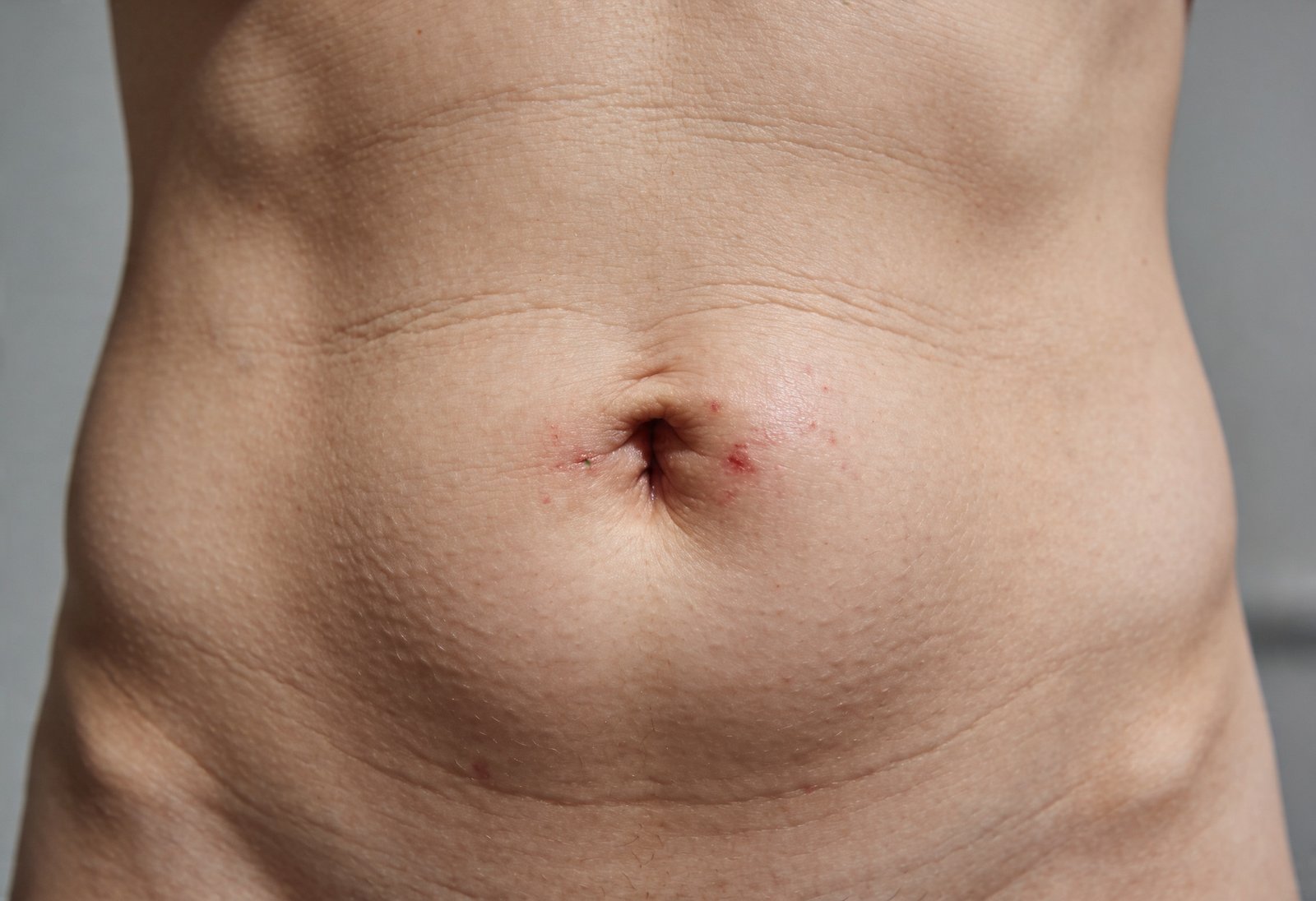
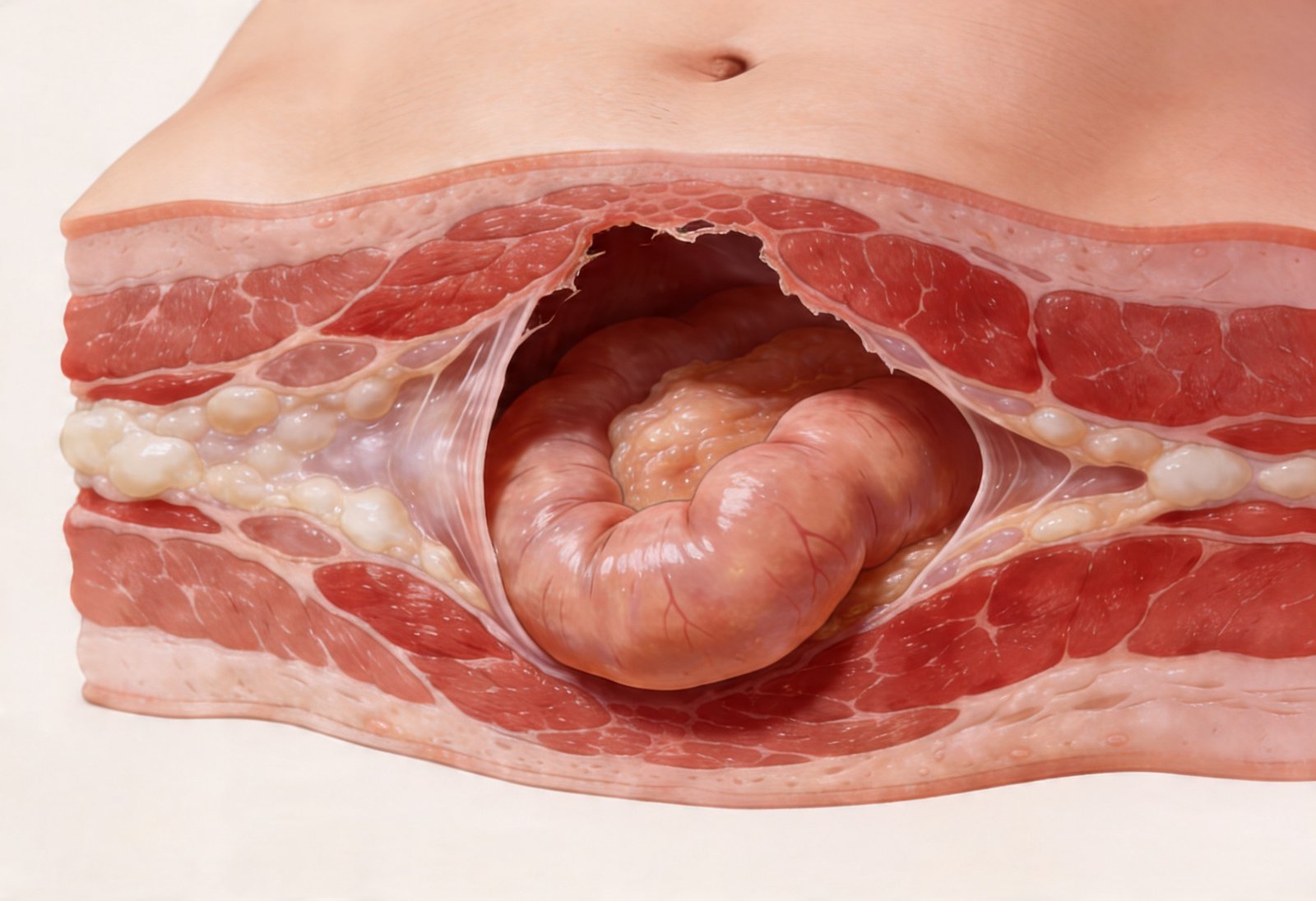
A hernia develops when an internal organ or fatty tissue pushes through a weak area in the muscle or fascia that normally holds it in place. While it often appears as a simple bulge, a hernia is actually a structural failure of the abdominal wall.
Globally, more than 20 million hernia repairs are performed annually. In India, hernia incidence has steadily increased over the past three decades due to demographic shifts, obesity, manual labor demands, and rising rates of chronic respiratory conditions.
Understanding what causes hernias requires looking at two fundamental mechanisms:
When these two forces intersect, herniation occurs.
The abdominal wall is composed of multiple muscle layers reinforced by strong connective tissue (fascia). Certain areas are naturally weaker:
These sites are common locations for hernia formation.
Hernias typically develop due to a combination of:
This may be:
Pressure spikes occur during:
Over time, repeated pressure pushes internal tissue through weak spots.
Some individuals are born with structural openings that fail to close properly.
Example:
This is especially common in male patients.
As we age:
This increases susceptibility to direct inguinal and ventral hernias.
Excess abdominal fat:
Urban Indian populations have shown a rise in umbilical and ventral hernias linked to central obesity.
Incorrect lifting technique significantly increases hernia risk.
Bending from the waist instead of the knees directs force to the lower abdominal wall. Agricultural laborers, construction workers, and gym users are particularly at risk.
Persistent coughing caused by:
Repeated pressure surges weaken groin structures over time.
Frequent straining during bowel movements repeatedly increases intra-abdominal pressure, contributing to inguinal and umbilical hernias.
Pregnancy causes:
Umbilical and femoral hernias are more common in women post-pregnancy.
Surgical scars are inherently weaker than original tissue. If healing is compromised by:
An incisional hernia may develop.
Type | Location | Common Causes |
Inguinal | Groin | Aging, lifting, congenital weakness |
Femoral | Below groin | Pregnancy, aging |
Umbilical | Navel | Obesity, pregnancy |
Hiatal | Diapagm | Chronic pressure, aging |
Ventral | Midline | Muscle weakness |
Incisional | Surgical scar | Poor wound healing |
High-risk groups include:
In rural India, hernia prevalence is significantly higher among agricultural workers due to physical strain.
Hiatal hernias may present with:
Seek urgent care if:
These signs suggest strangulation, a surgical emergency.
Diagnosis involves:
Women often require imaging due to subtle presentation.
No.
A hernia is a mechanical defect. It does not close with:
While lifestyle changes reduce progression, surgery is the only definitive cure.
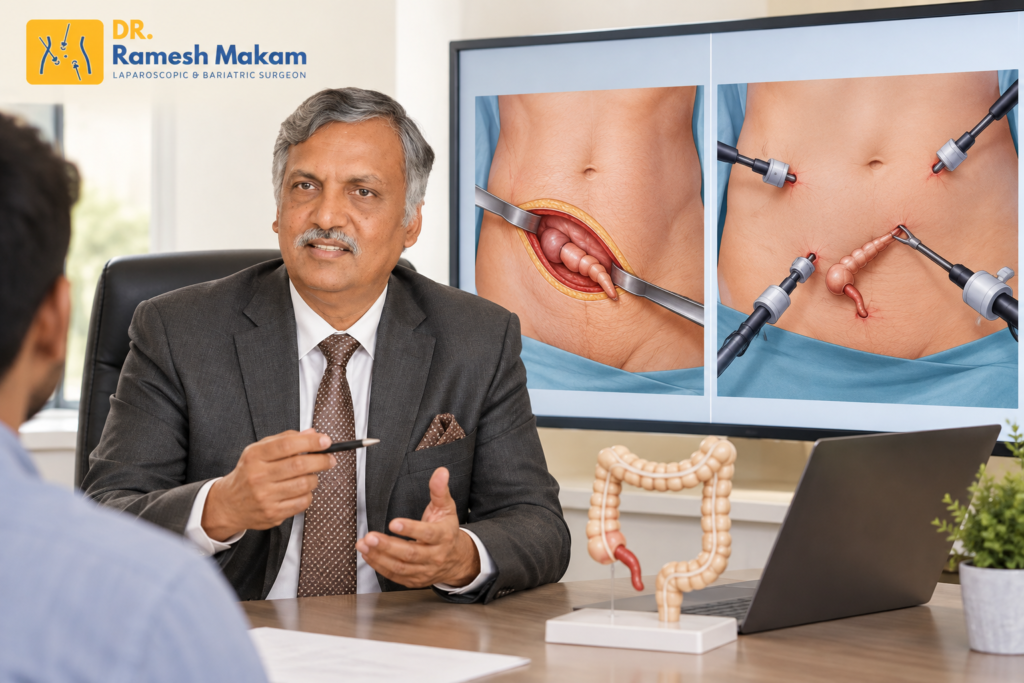
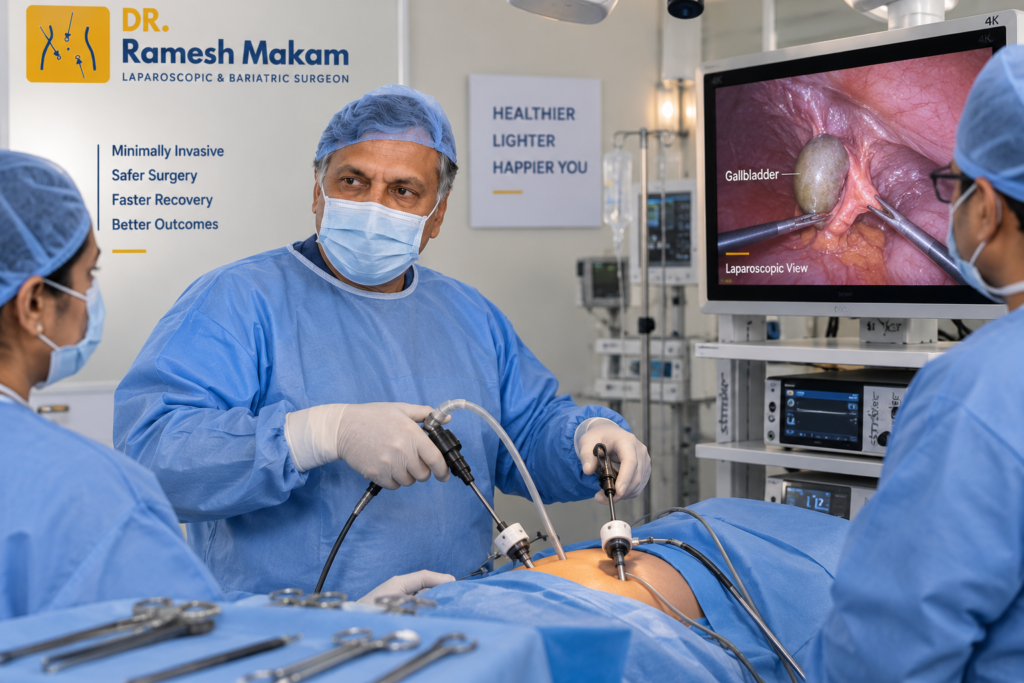
Minimally invasive approach using mesh reinforcement.
Benefits:
Provides:
Used in:
Time | Activity |
Day 1 | Walking |
Week 1 | Desk work |
Week 2–3 | Light exercise |
Week 4–6 | Gradual return to full activity |
Week 8+ | Unrestricted movement |
Avoid heavy lifting for 4–6 weeks.
While congenital weakness cannot be changed, you can reduce risk by:
You should seek evaluation if:
Early elective surgery prevents emergency complications.
Advanced hernia care in Bengaluru is available under the leadership of Dr. Ramesh Makam, a pioneer of minimally invasive surgery in Karnataka.
He practices at:
With over 35 years of experience and thousands of procedures performed, his approach emphasizes:
Consultation bookings are available at:
https://drrameshmakam.com/
BEST Institute was started with the intention of sharing my knowledge with
other fellow surgeons. During this journey, many conferences and workshops
have been conducted. Skills training is the highlight of this Institute.
March 31, 2026 Strangulated Hernia: A Life-Threatening Emergency Explained Introduction A strangulated hernia is the most dangerous complication of an untreated…
March 31, 2026 What Happens If a Hernia Is Not Treated? Clinical Progression, Complications, and When to Act An untreated hernia…
March 17, 2026 What Causes Hernias? Root Triggers, Risk Factors, and Modern Recovery Pathways Introduction A hernia develops when an internal…