Dr Ramesh Makam

Ventral Hernia: Symptoms, Causes and Advanced Surgical Treatment in Bengaluru

Introduction

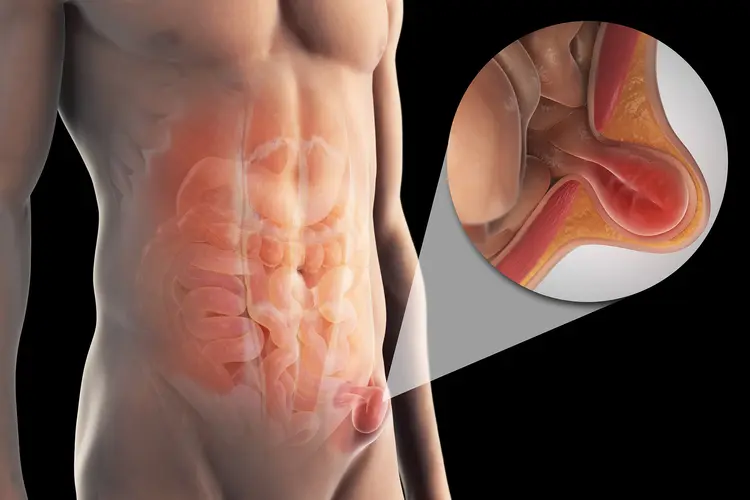
A ventral hernia is a defect in the abdominal wall that allows internal tissues or organs to protrude outward, creating a visible bulge. While many patients initially consider it a minor issue, ventral hernias are progressive structural problems that can enlarge over time and, in rare cases, become life-threatening.

In India, especially in growing urban regions like Bengaluru and South Bengaluru, rising obesity rates and increasing abdominal surgeries have made ventral hernias more common. Modern surgical science has significantly improved outcomes through minimally invasive and mesh-based repair techniques.

This guide explains the causes, symptoms, diagnosis, and advanced ventral hernia treatment options available today.

What Is a Ventral Hernia?

A ventral hernia refers to any hernia occurring through the front wall of the abdomen. It includes:

  • Incisional hernia – occurring at the site of a previous surgery
  • Umbilical hernia – around the belly button
  • Epigastric hernia – between the chest and the navel

The abdominal wall is made up of muscle and fascia. When this fascia weakens or separates, abdominal contents push through, forming a bulge.

Why Ventral Hernias Enlarge Over Time

The abdominal wall constantly experiences pressure from:

  • Breathing
  • Coughing
  • Bowel movements
  • Lifting
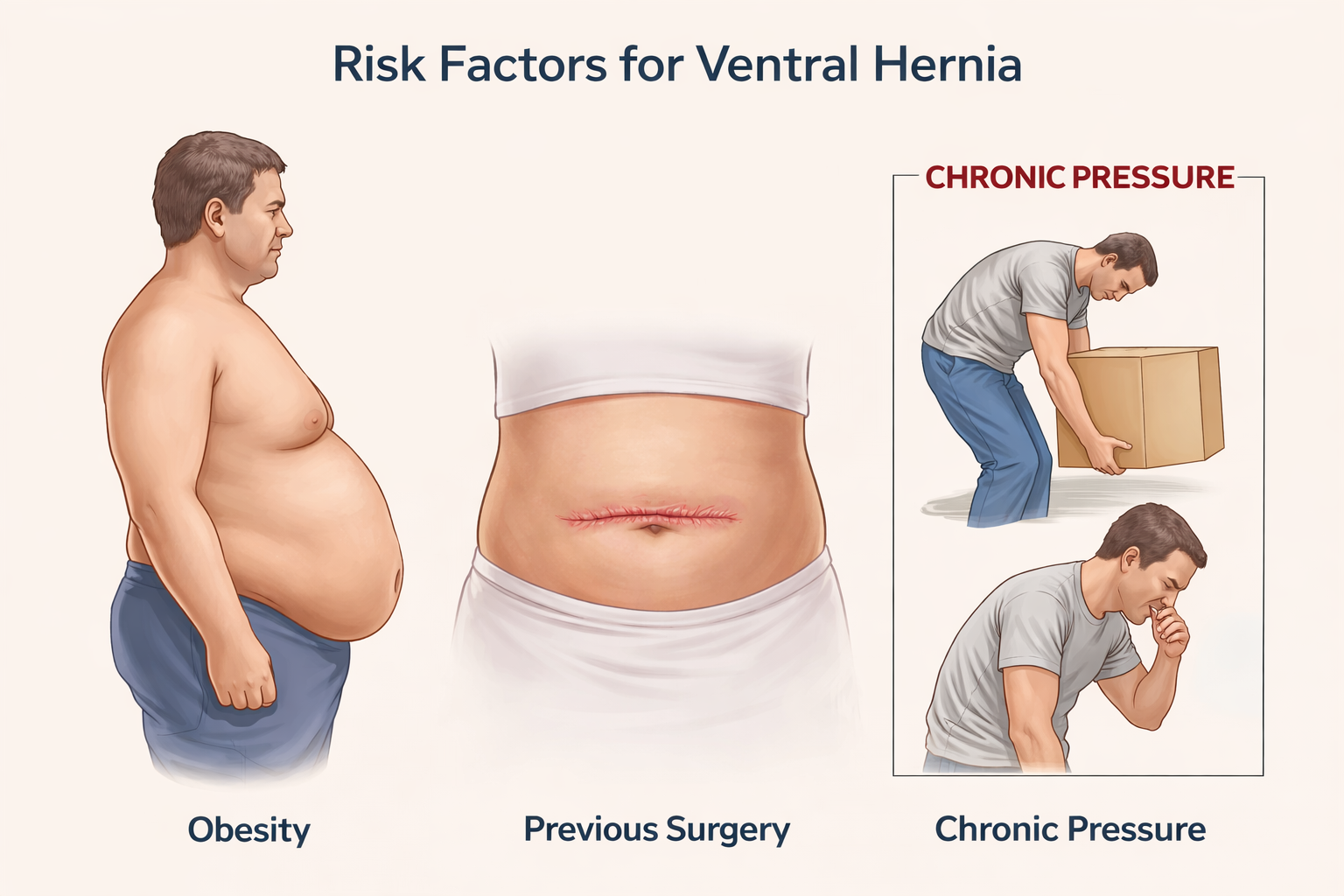
  • Obesity

According to principles similar to Laplace’s Law, as the defect grows larger, the tension on the surrounding tissues increases. This creates a cycle where:

Small defect → Increased pressure → Larger defect → More strain

This is why most ventral hernias do not remain stable without repair.

Causes of Ventral Hernia

1. Previous Abdominal Surgery

Incisional hernias are the most common type. Risk increases if:

  • There was a wound infection
  • Healing was delayed
  • Sutures were under tension
  • Emergency surgery was performed

2. Obesity

Excess visceral fat increases intra-abdominal pressure and weakens fascia.

3. Chronic Cough

Seen in smokers and patients with respiratory disease.

4. Chronic Constipation

Repeated straining weakens the abdominal wall.

5. Pregnancy

Hormonal softening and stretching of tissues.

6. Heavy Lifting

Sudden spikes in pressure may trigger defect formation.

Symptoms of Ventral Hernia

Early Stage – Reducible Hernia

  • Soft abdominal bulge
  • Appears when standing
  • Disappears when lying down
  • Mild discomfort

Incarcerated Hernia

  • Bulge becomes stuck
  • Persistent pain
  • Increasing discomfort

Strangulated Hernia – Emergency

  • Severe, sudden pain
  • Red or purple skin over bulge
  • Nausea and vomiting
  • Inability to pass gas
  • Fever

Strangulation cuts off blood supply and requires emergency surgery.

If you notice a painful, non-reducible bulge, immediate evaluation is necessary.

Diagnosis of Ventral Hernia

Physical Examination

The doctor may ask you to cough or strain to make the bulge visible.

Imaging Tests

  • Ultrasound – confirms presence of defect
  • CT Scan – gold standard for evaluating size and complexity
  • MRI – used selectively

Accurate imaging helps plan the surgical approach.

At advanced centers in Bengaluru, including Arka Anugraha Hospital and AV Hospital Bengaluru, comprehensive imaging ensures precise treatment planning.

Treatment Options for Ventral Hernia

Watchful Waiting

May be considered if:

  • Hernia is very small
  • Completely asymptomatic
  • Patient has high surgical risk

However, most ventral hernias enlarge over time and eventually require repair.

Surgical Treatment of Ventral Hernia

Modern hernia repair follows a “tension-free” principle using mesh.

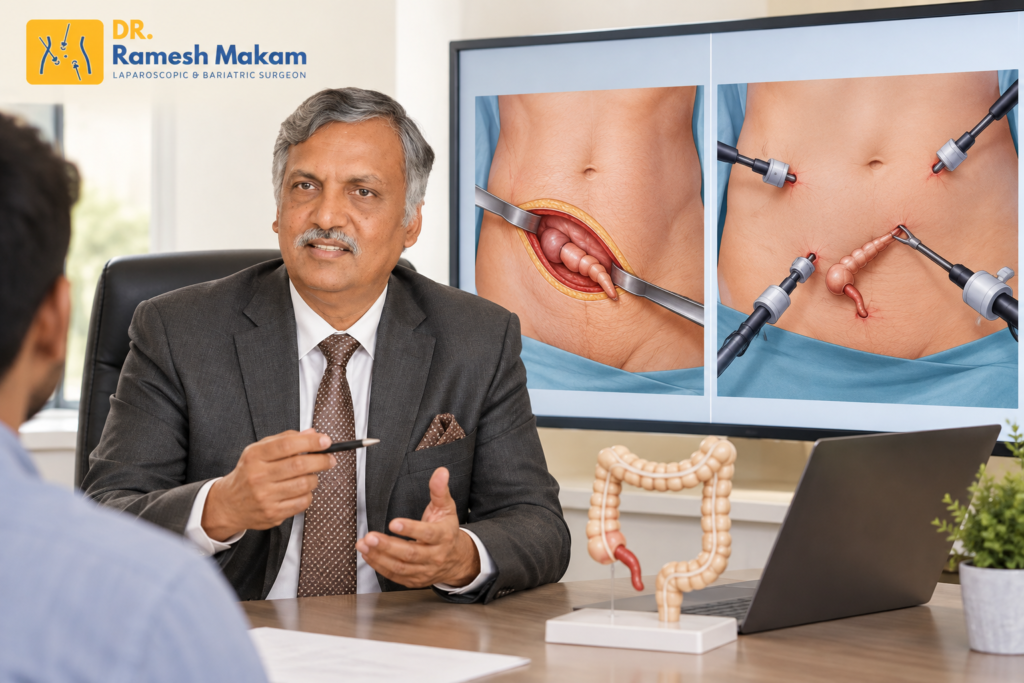
Open Ventral Hernia Repair

  • Single incision
  • Suitable for very large hernias
  • Longer recovery
  • Slightly higher infection risk

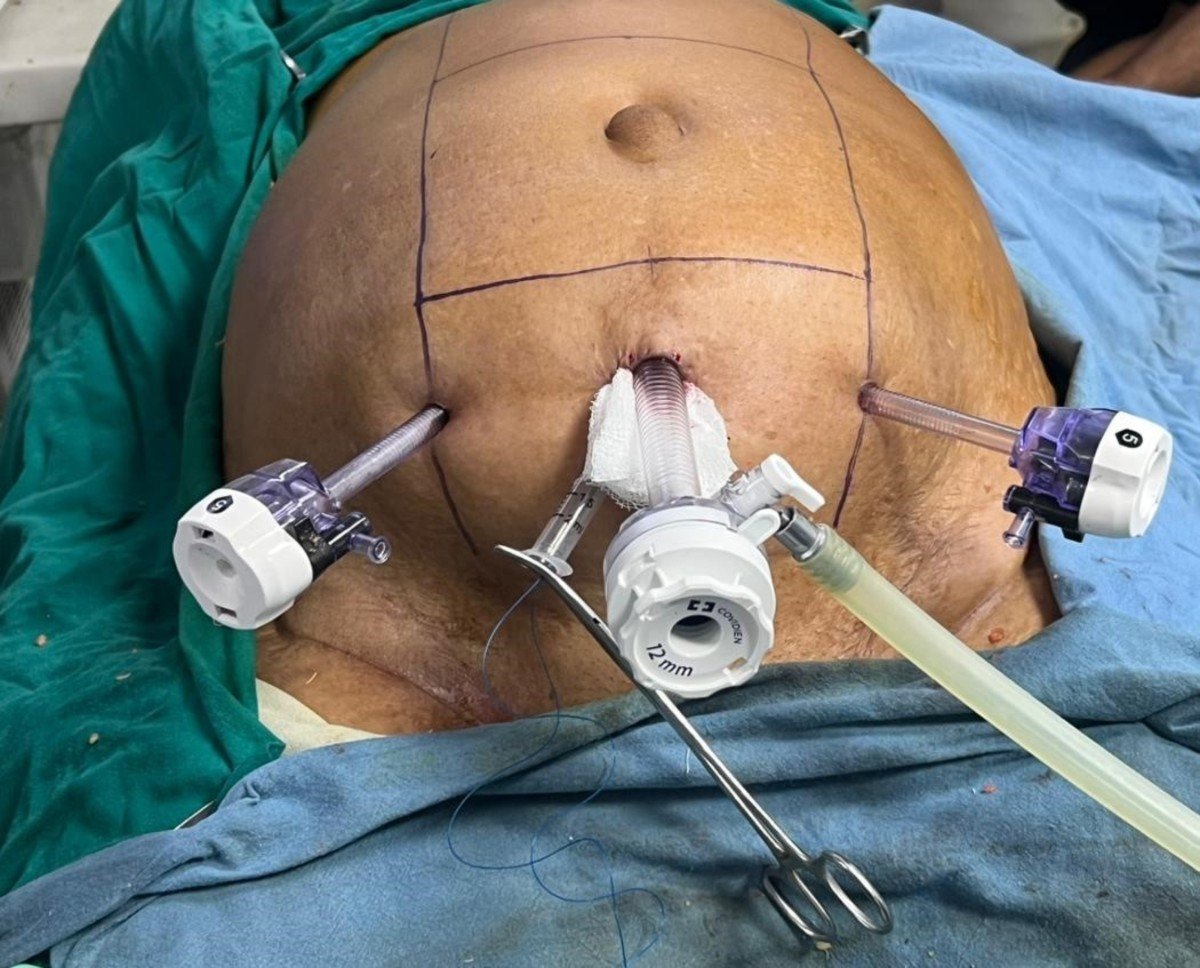
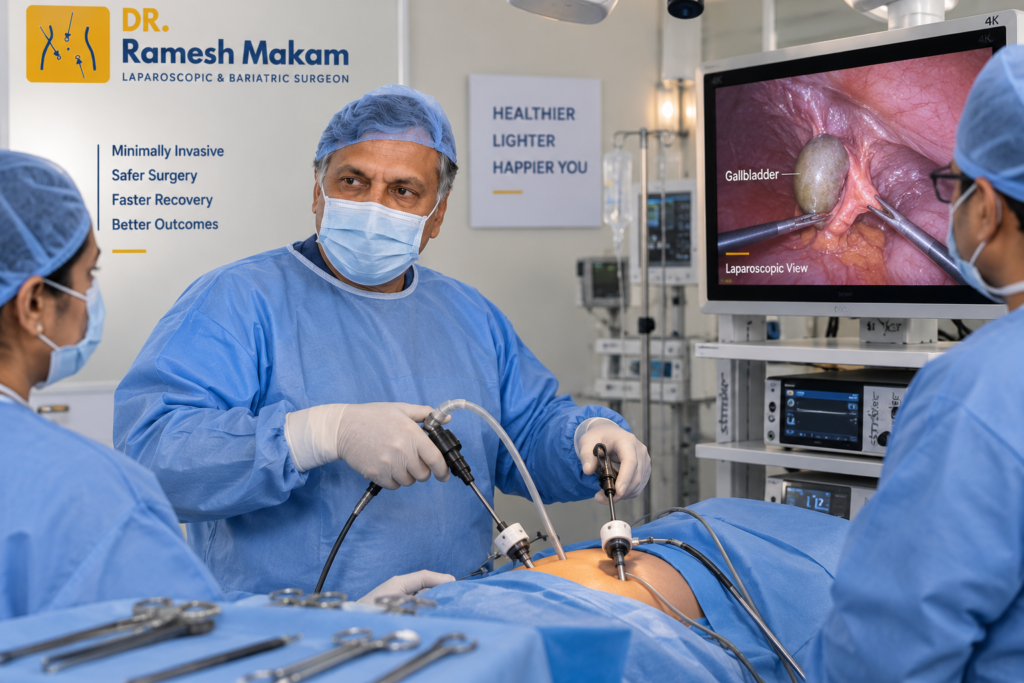
Laparoscopic Ventral Hernia Repair

  • 3–4 small incisions
  • Camera-guided repair
  • Lower infection rates
  • Faster recovery
  • Short hospital stay

Robotic Ventral Hernia Repair

  • Enhanced 3D visualization
  • Precise suturing
  • Beneficial for complex cases

The choice depends on defect size, location, previous surgeries, and patient health.

The Role of Mesh in Repair

Mesh reinforces the weakened abdominal wall.

Types of Mesh

  • Polypropylene mesh – durable and commonly used
  • Composite mesh – protective coating to reduce adhesions
  • Biological mesh – used in infected fields

Modern lightweight, macroporous mesh integrates naturally with body tissue and reduces stiffness.

Mesh dramatically lowers recurrence compared to stitches alone.

Recovery Timeline After Ventral Hernia Surgery

First 6 Hours

  • Walking encouraged

First Week

  • Light activities
  • Avoid lifting

First 6 Weeks

  • No lifting over 4 to 5 kg
  • Critical mesh integration period

After 3 Months

  • Gradual return to full activity

Following post-operative instructions significantly reduces recurrence.

Preventing Recurrence

  • Maintain healthy weight
  • Stop smoking
  • Avoid chronic constipation
  • Follow lifting precautions
  • Strengthen core gradually after healing

In the Indian dietary context, fiber-rich foods like vegetables, whole grains, lentils, and adequate hydration help prevent straining.

When Should You See a Specialist?

Consult a surgeon if you notice:

  • A new abdominal bulge
  • Bulge after previous surgery
  • Increasing size of swelling
  • Pain during lifting or exercise
  • Persistent discomfort

Early consultation simplifies surgery and improves outcomes.

Patients in Bengaluru can seek evaluation from Dr. Ramesh Makam, an experienced minimally invasive surgeon with over three decades of expertise in abdominal wall reconstruction.

Appointments can be scheduled through:
https://drrameshmakam.com/

Why Choose an Experienced Specialist?

Advanced ventral hernia repair requires:

  • Precise defect mapping
  • Proper mesh selection
  • Minimal tension repair
  • Expertise in laparoscopic and robotic techniques

Dr. Ramesh Makam practices at Arka Anugraha Hospital and AV Hospital Bengaluru, where multidisciplinary care ensures optimized recovery.

Conclusion

A ventral hernia is not just a cosmetic bulge. It is a structural defect in the abdominal wall that can enlarge and lead to serious complications if ignored.

Modern surgical techniques have transformed outcomes, offering:

  • Lower recurrence
  • Less pain
  • Faster recovery
  • Shorter hospital stay

Timely evaluation and appropriate repair restore abdominal strength and protect long-term health.

If you suspect a ventral hernia, seeking early specialist consultation is the safest course of action.

FAQs

1. Can a ventral hernia go away on its own?

No. It is a structural defect and does not heal without surgery.

2. Is ventral hernia dangerous?

It can become dangerous if strangulated.

3. How long does laparoscopic surgery take?

Usually 1 to 2 hours.

4. How soon can I walk after surgery?

Walking is encouraged within hours.

5. Is mesh safe?

Modern mesh is very safe and reduces recurrence significantly.

6. Can obesity cause recurrence?

Yes. Excess weight increases pressure on the repair.

7. How long is hospital stay?

Typically 1 to 2 days for minimally invasive surgery.

8. When can I resume gym workouts?

Usually after 6 to 12 weeks depending on healing.

BEST Institute was started with the intention of sharing my knowledge with
other fellow surgeons. During this journey, many conferences and workshops
have been conducted. Skills training is the highlight of this Institute.

Recent Post

Ventral Hernia: Symptoms, Causes and Advanced Surgical Treatment in Bengaluru

Ventral Hernia: Symptoms, Causes and Advanced Surgical Treatment in Bengaluru

March 3, 2026 Ventral Hernia: Symptoms, Causes and Advanced Surgical Treatment in Bengaluru Introduction A ventral hernia is a defect in…

Hiatal Hernia: Causes, Symptoms and Advanced Treatment in Bengaluru

Hiatal Hernia: Causes, Symptoms and Advanced Treatment in Bengaluru

February 24, 2026 Hiatal Hernia: Causes, Symptoms and Advanced Treatment in Bengaluru Introduction: When Acid Reflux Is a Mechanical Problem Many…

Umbilical Hernia in Adults: Symptoms, Causes and When to See a Surgeon

Umbilical Hernia in Adults: Symptoms, Causes and When to See a Surgeon

February 17, 2026 Umbilical Hernia in Adults: Symptoms, Causes and When to See a Surgeon Introduction: Understanding Umbilical Hernia An umbilical…